
Discreet residential and protective support in Loughton and Buckhurst Hill. Coverage is shaped by substantial houses on wooded hills, the open and unlit forest that borders them and a short daily commute into the City.
Loughton lies inside the M25 on the Essex side of the boundary, thirteen miles from Charing Cross, with Epping Forest on its western flank and the Roding valley east. The forest is the fact that shapes everything. It is open, managed by the City of London Corporation, unlit, crossed by paths and car parks, and many of the largest houses back directly onto it. Those houses stand on Alderton Hill, Spareleaze Hill, Traps Hill and Baldwins Hill, where long plots and mature trees screen substantial properties and upper floors look out over London. Little Cornwall, the steep corner in the north west with its weatherboarded cottages and narrow lanes, keeps a village character, and High Beach sits above it in the forest. Buckhurst Hill to the south is a smaller version of the same picture, with Queen's Road as its centre and Knighton Woods at its back. Residents are finance and property principals, business owners and some sporting and media families, most of whom commute. Loughton, Debden and Buckhurst Hill stations on the Central line reach the City in around half an hour, and junction 5 of the M11 sits on the eastern edge at Debden.
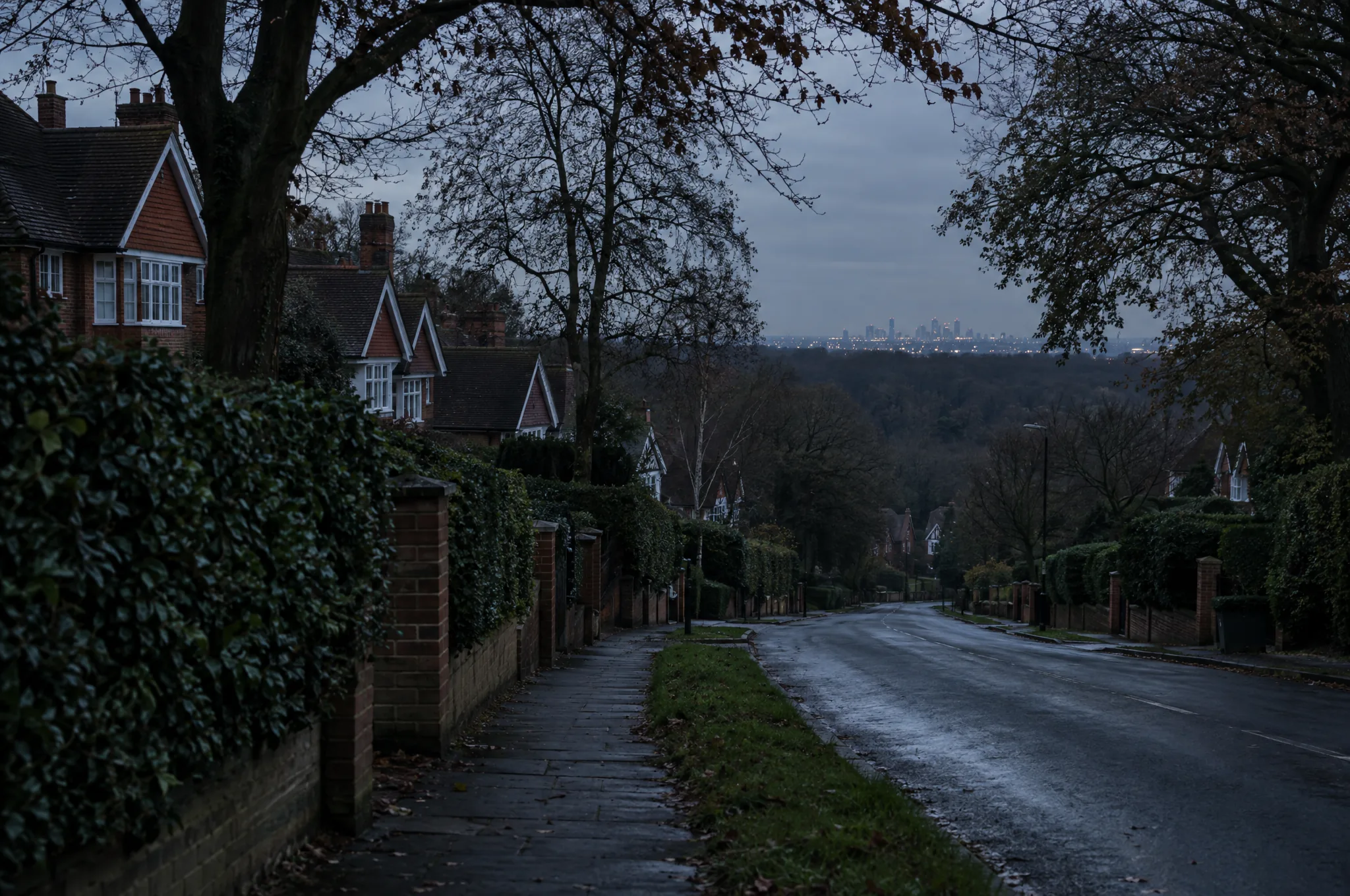
We begin with the boundary. A garden that meets Epping Forest has no neighbour on that side, only a public wood that is empty and dark for most of the winter day, and the forest paths and car parks give an approach to the rear that no camera on the front gate will record. We assess the house from the forest first, then from the road, in light and in darkness, because a property on Alderton Hill presents differently at four in the afternoon in January than in July. Coverage is kept quiet. Loughton is a town rather than a village, but its hills are residential and a conspicuous presence would be noted. For a principal who commutes on the Central line we look at the walk to the station and the few roads that serve it. Where a household wants a response close at hand without staff in the house, a discreet client carried capability is integrated.
Residential Protection is planned for houses on the hills of Loughton and Buckhurst Hill whose rear boundaries run into Epping Forest, where the tree line is the open side.
Threat and Risk Mitigation looks at the Central line commute, the forest paths behind the house and the staff who know when the family is away.
Close Proximity Response gives a child walking between Loughton station, school and home, or a principal running the forest rides, a discreet alert with a planned response.
Loughton is a residential requirement almost without exception. There is little corporate work here and the profile of most households is private rather than public.
The forest boundary comes first. Epping Forest is never closed, is used by walkers and riders in daylight and by almost nobody after dark, and it runs for miles along the rear of the hills. A fence against it is a boundary with a wood rather than a neighbour.
The terrain matters too. The hills give the houses their views and the paths above them a view back. Upper windows and gardens are visible from public ground on several roads.
Front boundaries are usually competent. Gates, cameras and alarms are common on Spareleaze Hill and Alderton Hill. What they cover and who can open them is the question.
The household's people widen the picture. Gardeners, cleaners, tutors and contractors come and go on a weekly rhythm, and the list is rarely written down.
The commute is short and fixed. A principal who walks to Loughton or Buckhurst Hill station for the same train each weekday is legible to anyone who wishes to watch, and the return in winter darkness is the more exposed leg.
The same belt continues east into Chigwell, where the houses are newer, more visible and more often occupied by residents with a public profile.
The wider county pattern is described on the Essex page.
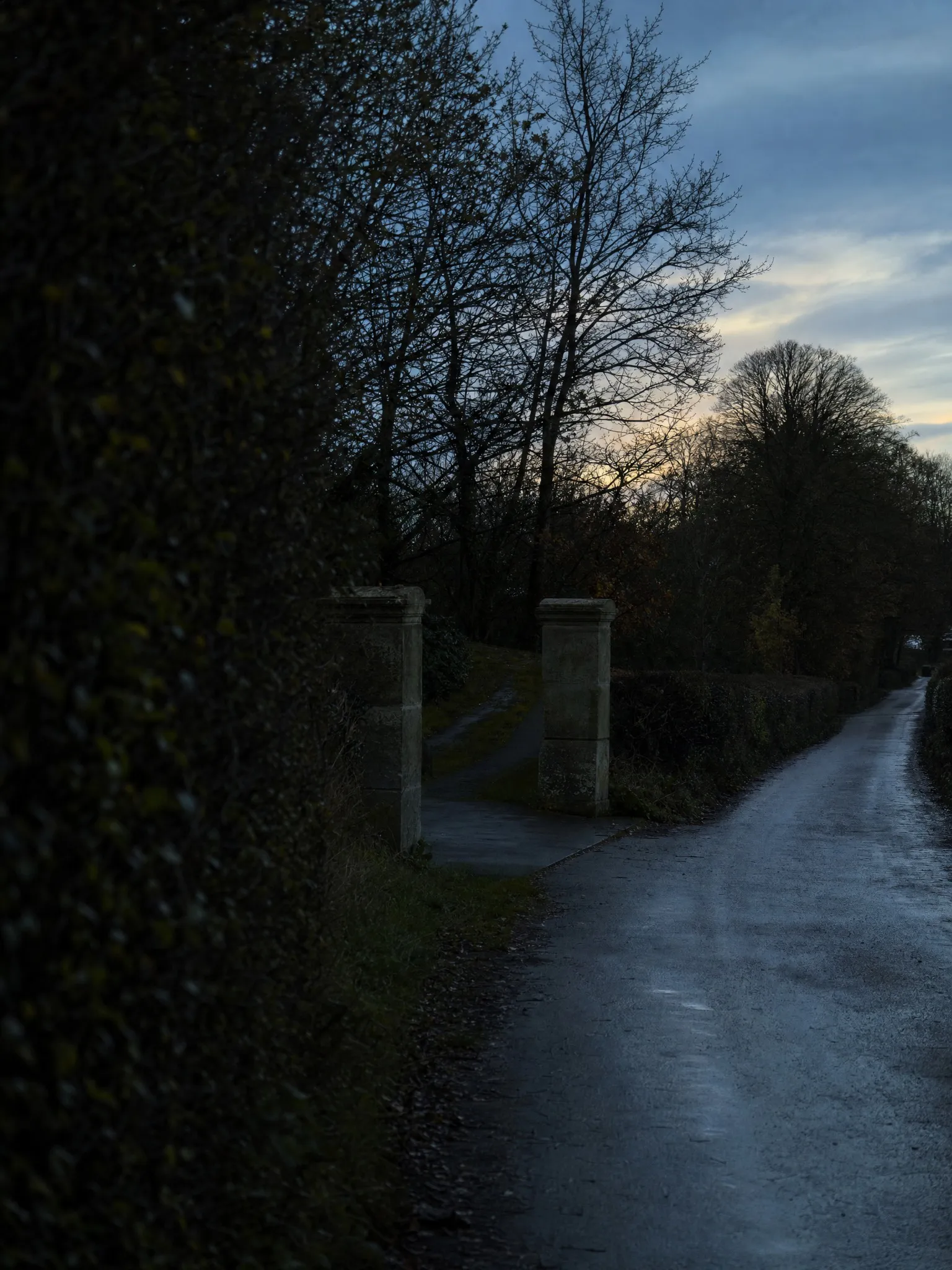
Winter is the season that matters. The forest is dark by mid afternoon from November to February, the rear boundaries of the hill roads are unobserved for sixteen hours a day, and the commute home arrives after dark. That is when a residential assessment is most often requested.
Summer reverses the picture. Fine weekends and bank holidays fill the forest car parks at High Beach and along the Epping New Road, and the paths behind the houses carry more strangers than at any other time. The household is also more often away, which moves the question to an empty property.
Term dates set the daily pattern. Families here send children to Chigwell School, to Bancroft's at Woodford Green and to schools in London, and the school run and the station walk share the same hour.
The Central line delivers principals to Bank and Liverpool Street, and the arrival in the City of London is the fixed point at the far end of the journey.
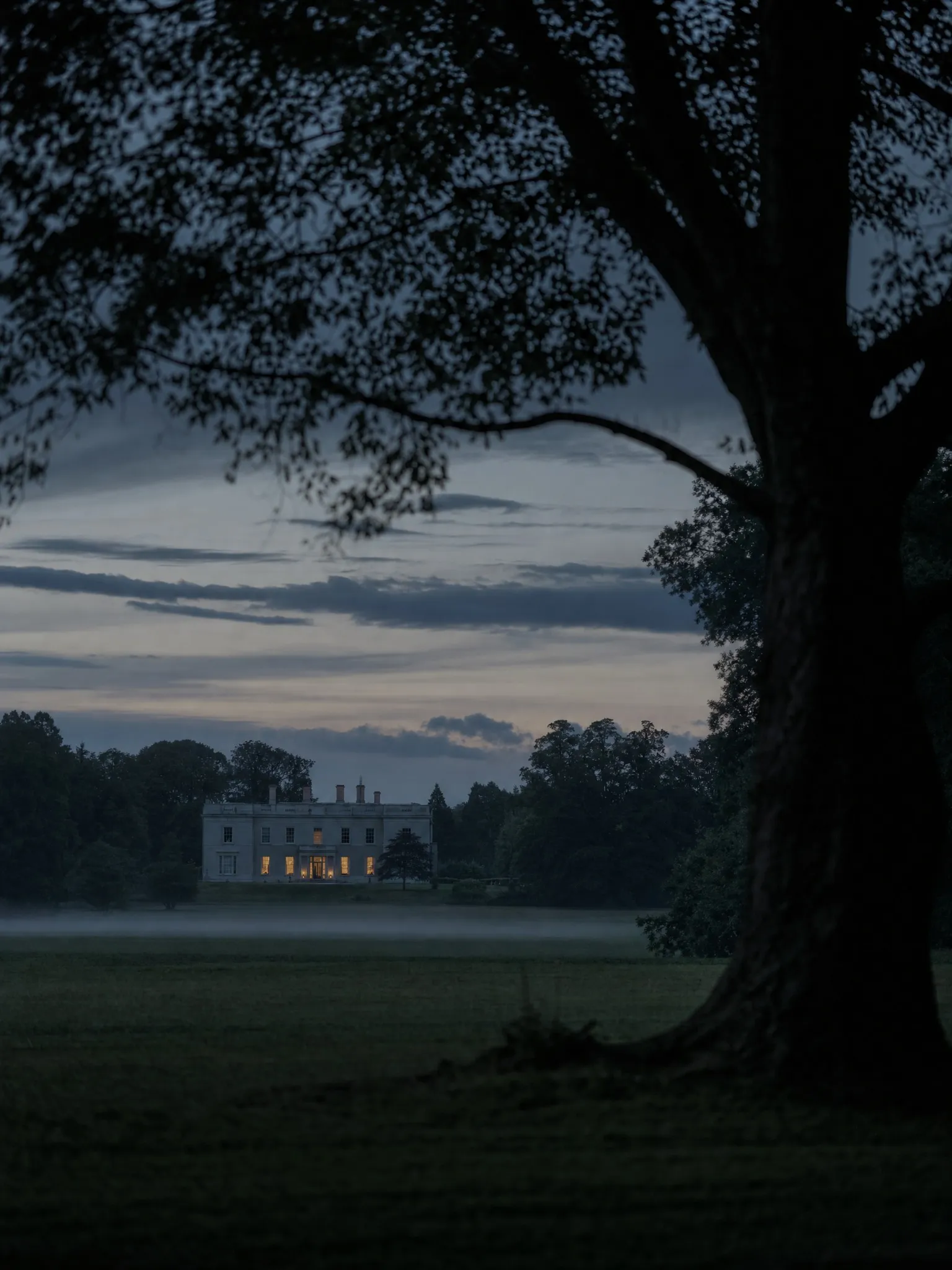
Residential assessments are the standing request, and the forest boundary is the reason most households make it. A family has bought a house on the hill with a garden that meets the wood and wants to know what that means after dark.
Access control follows. Households ask who should hold gate and alarm codes, how contractors are admitted and how a change of staff should be handled.
Protective intelligence is requested when something has changed: a dispute, a sale, a divorce, a matter at work that has made the principal more visible than before.
Families ask about children walking to school and to the station without an escort, and a client carried capability is usually the answer.
Technical examinations follow the builders out, and the builders are rarely absent from these hills.
Security chauffeuring is occasional, mostly airport runs and London evenings.
Comparable questions arise on the other side of north London in Hadley Wood, where green belt within the M25 gives houses a similar open boundary.
The house itself, its gates, drives and delivery access, is assessed under residential protection.
All enquiries are handled discreetly and reviewed before engagement suitability is determined. Information should be limited to what is necessary to outline the matter. Where appropriate, further contact is arranged following review.

Protect
Executive ProtectionDiscreet, intelligence led executive protection for private clients, principals and families, designed to reduce exposure and preserve freedom of movement without unnecessary visible presence.
Mitigate
Threat and Risk MitigationStructured assessment that identifies where exposure exists and reduces it through proportionate, targeted measures across people, places and routine.

Detect
Surveillance DetectionSurveillance detection identifies hostile interest and emerging patterns of activity, providing early warning of potential threats before targeting progresses to action.
Sweep
Technical SurveillanceTechnical surveillance that detects covert devices, unauthorised transmissions and technical compromise across residences, offices and sensitive environments.

Secure
Security ChauffeuringSecure movement delivered through trained protective drivers, considered route planning and continuous situational awareness.
Fortify
Residential ProtectionResidential protection for private homes and estates, drawing on assessment, access control and continuity to protect principals and families at home.

Respond
Close Proximity Response™A discreet, client carried alert and live location capability that lets a protective team maintain proximity and respond immediately, without an overt security presence.