
Discreet residential and protective support in Esher. Coverage is shaped by private roads without barriers, plots that back onto common land and parkland, a racecourse at the top of the town and a school run that most households share.
Esher sits on the Portsmouth Road between the River Mole and the A3, thirteen miles from central London. Its wealth is arranged in a small number of private road estates rather than in one gated enclosure. Blackhills lies to the south near Claremont and the A3, with plots of half an acre and more behind mature planting. Esher Park Avenue and its cul de sacs sit within walking distance of the High Street. The Claremont estate is built around a nine hole golf course beside the eighteenth century parkland of Claremont Landscape Garden, with Claremont Fan Court School in the grounds. Sandown Park racecourse occupies the northern edge beside the station, from which fast trains reach Waterloo in under half an hour. Residents are established families, finance and business principals and some of the professional footballers drawn to the borough. Movement runs along the A307 through the town and out onto the A3, and the commons to the south carry footpaths that reach the backs of the larger plots. Exposure concentrates on the private roads themselves, on race days, and around the school gates.
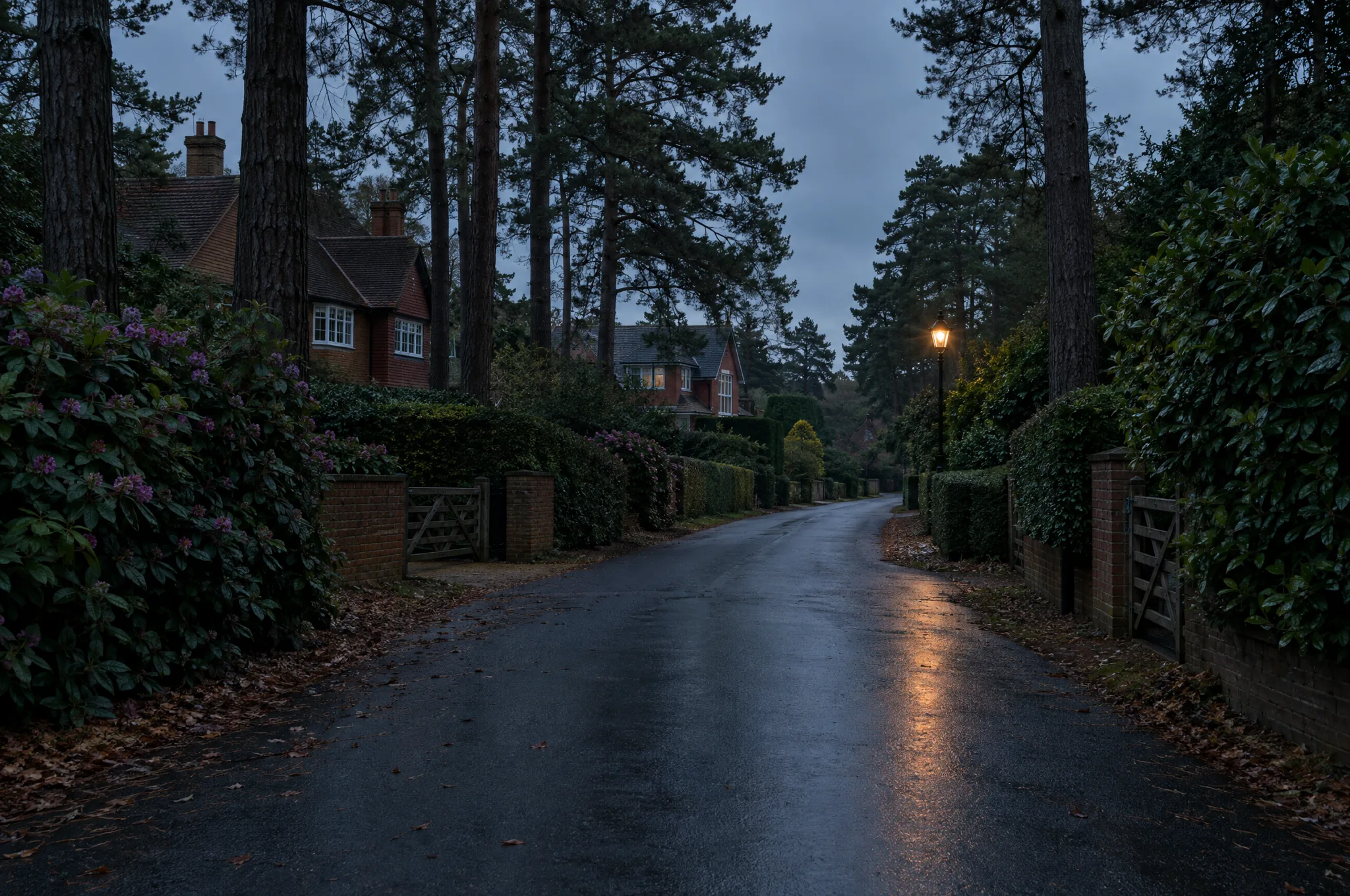
The practice treats a private road as a boundary rather than a barrier. Blackhills, Esher Park Avenue and Claremont are private in tenure but open in practice, and anyone can drive or walk their length without challenge, so the assessment begins at the mouth of the road and works inward to the drive, the gate and the house. We survey plot boundaries where they meet the commons and Claremont's parkland, and we establish who holds access to the household, which here usually means gardeners, cleaners, tutors and drivers. Around Sandown Park we plan movement against the racecourse calendar, since a meeting changes traffic on the Portsmouth Road for a full afternoon. For families with children at Claremont Fan Court or the preparatory schools nearby we fold the school run into residential planning rather than treating it as a separate task. A single officer or a driver who observes is usually the whole visible arrangement.
Residential Protection on Blackhills, Esher Park Avenue and Claremont starts from the fact that a private road is known to every contractor who has worked on it.
Security Chauffeuring plans the Waterloo commute, the school run and Heathrow around the A307 and the A3 at the Scilly Isles, the roads that carry everything.
Threat and Risk Mitigation for an Esher household weighs contractor routine, the access circle and the race days when Sandown Park fills the roads.
Esher work starts with the private roads. They are privately maintained but not gated, and their seclusion rests on convention rather than on any control at the entrance.
That distinction matters. A road that anyone may enter gives an observer a legitimate reason to be present, and the mature planting that screens each house from its neighbours screens the observer as well. The survey therefore covers the road as much as the house, and it records what a car parked at the verge for twenty minutes can see.
The southern plots back onto Esher Common and Claremont's parkland. Both are well used in daylight and deserted after dark, and the footpaths that make them pleasant give unlit access to rear boundaries. We walk them at night as part of every residential assessment.
Household access is wide. Plots of half an acre need gardeners, and houses of this size need cleaners, tutors, pool and property contractors and a driver, each holding a key, a code or a standing welcome. Establishing who holds what is usually the most productive hour of the work.
Sandown Park shapes the northern side. On a race day the Portsmouth Road fills, the station empties and refills, and the car parks put several thousand strangers within a few hundred yards of the nearest houses.
Journeys out run down the A3 towards the Cobham side of the A3, or across to St George's Hill in Weybridge, on roads where a followed car is easy to miss.
The wider stockbroker belt is covered under Surrey.
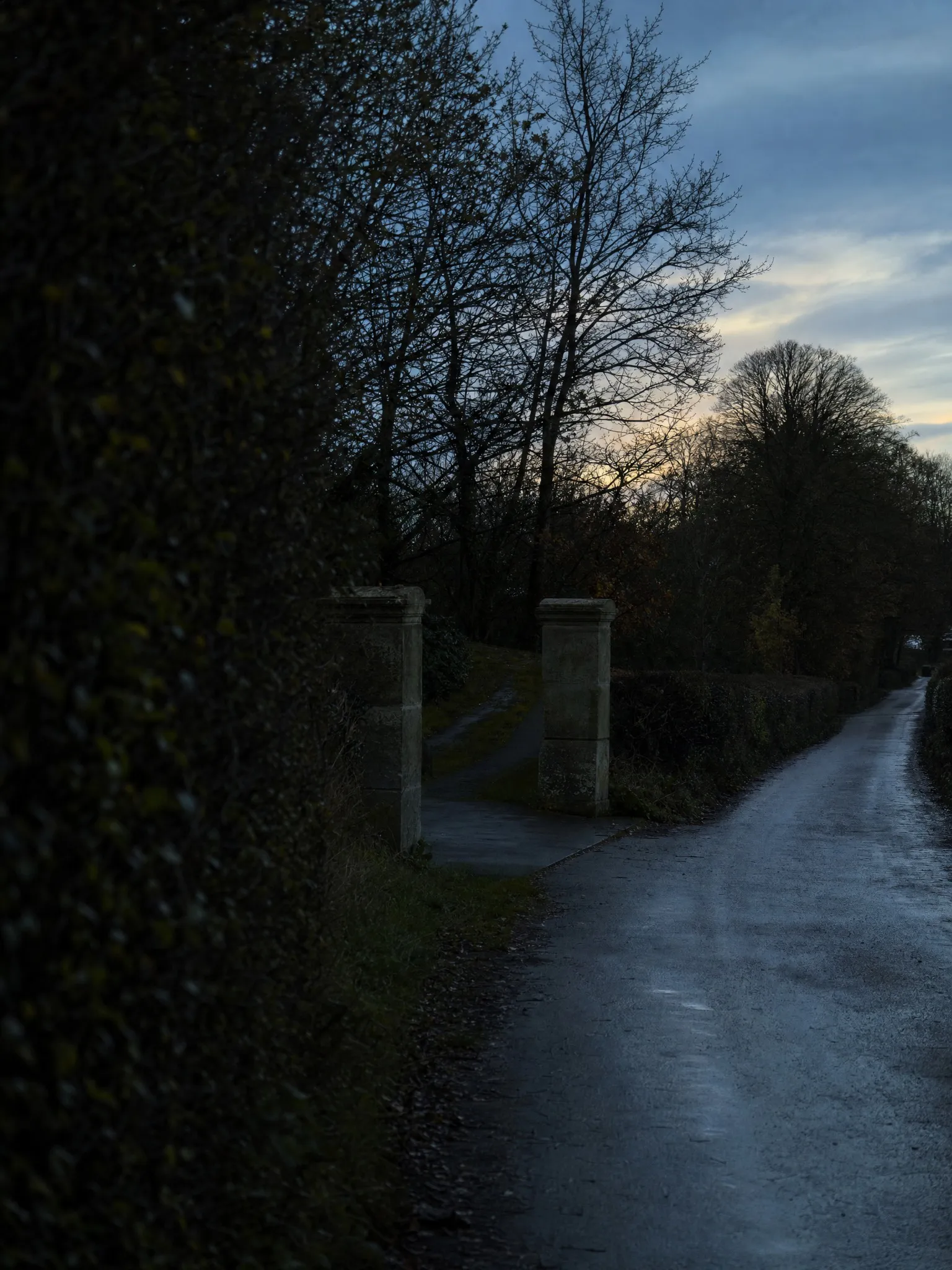
Sandown Park sets the calendar. The bet365 Gold Cup closes the jumps season in late April, the Eclipse brings the flat racing crowd in early July, and the Tingle Creek meeting fills the course in early December. Between meetings the site hosts exhibitions, concerts and antiques fairs, so the quiet weeks are fewer than the fixture list suggests.
Term dates at Claremont Fan Court and the local preparatory schools fix the school run to the same minutes each morning. The Christmas and summer breaks empty the private roads of routine and often of residents, and the question shifts from the road to the empty house and to whoever holds the keys.
Summer opens the commons. Longer evenings bring walkers, runners and dog owners to the paths behind the southern plots until late, at the point when the screening that protects privacy is at its thickest.
The same seasonal rhythm applies across the Crown Estate roads at Oxshott, a few minutes further along the A3.
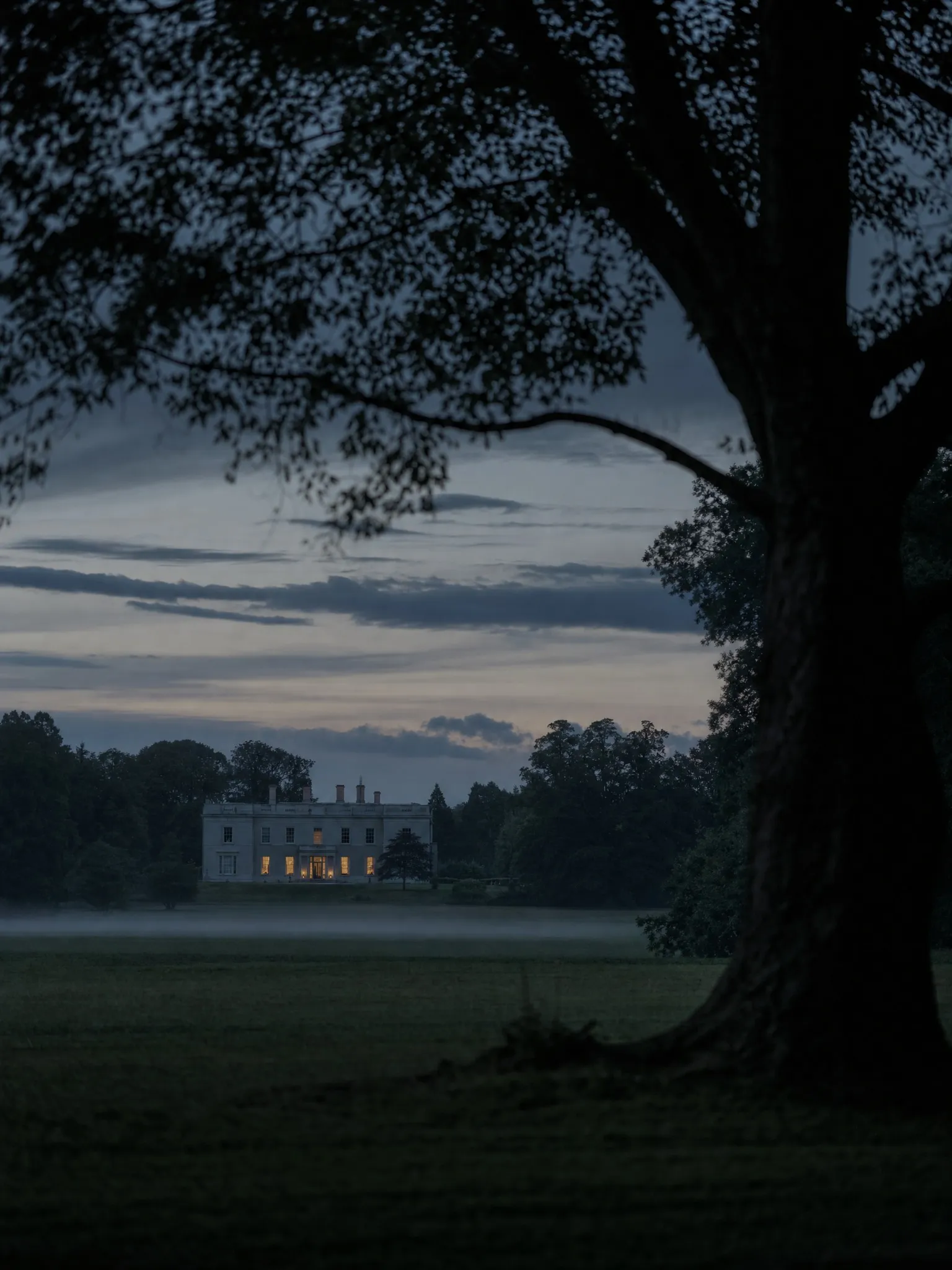
Residential assessment is the most common request in Esher, and it usually arrives after a move rather than after an incident. A family taking a house on Blackhills or Esher Park Avenue wants to know what the road, the boundaries and the existing alarm actually provide, and the honest answer is often less than the price implied.
Household access reviews follow. Families here inherit staff, contractors and codes with the house and ask us to establish who holds what.
Driving comes third. Principals ask for a driver who can cover the Waterloo commute one day and a school run or a Heathrow departure the next, and who notices what belongs on the A307. That requirement is described under security chauffeuring across Surrey.
Race day arrangements are requested by residents near Sandown Park and by principals attending in hospitality, where the exposure is social rather than physical.
Technical examinations are occasional, usually after building works.
Close protection in the visible sense is rarely what people here want, and we say so. Most enquiries are better answered by residential protection planned around the house.
All enquiries are handled discreetly and reviewed before engagement suitability is determined. Information should be limited to what is necessary to outline the matter. Where appropriate, further contact is arranged following review.

Protect
Executive ProtectionDiscreet, intelligence led executive protection for private clients, principals and families, designed to reduce exposure and preserve freedom of movement without unnecessary visible presence.
Mitigate
Threat and Risk MitigationStructured assessment that identifies where exposure exists and reduces it through proportionate, targeted measures across people, places and routine.
Detect
Surveillance DetectionSurveillance detection identifies hostile interest and emerging patterns of activity, providing early warning of potential threats before targeting progresses to action.
Sweep
Technical SurveillanceTechnical surveillance that detects covert devices, unauthorised transmissions and technical compromise across residences, offices and sensitive environments.

Secure
Security ChauffeuringSecure movement delivered through trained protective drivers, considered route planning and continuous situational awareness.
Fortify
Residential ProtectionResidential protection for private homes and estates, drawing on assessment, access control and continuity to protect principals and families at home.

Respond
Close Proximity Response™A discreet, client carried alert and live location capability that lets a protective team maintain proximity and respond immediately, without an overt security presence.