
Security chauffeuring in Richmond for families and senior executives, planned around constrained roads, river crossings and a settled daily movement into London.
Richmond sits on the Thames in south west London, on the Surrey border, and is more open and green than the central districts. Large detached houses stand along Richmond Hill, around Richmond Green and through Petersham and Ham, many within generous grounds behind walls and mature planting. Richmond Park borders residential streets on the higher ground, and the river runs the length of the town.
Those features shape movement in a particular way. Richmond's geography is constrained. The river limits crossings, the park limits through routes, and the historic street pattern narrows the options considerably at peak times. A household leaving Richmond Hill for central London has a small number of realistic ways to do it, and the same is true in reverse.
This makes the daily journey difficult to vary in the way a Surrey commute can be varied, and it concentrates the exposure at a handful of predictable pinch points. Bridges, the approaches to them and the roads around the Green carry every vehicle leaving the area at the relevant hour.
The population is settled and affluent, families and senior executives who commute into London and beyond, with school runs and standing appointments layered on top of the commute. Richmond generates several regular journeys per household rather than one.
The area carries residential and family requirements alongside movement, and how we work across Richmond sets them out.
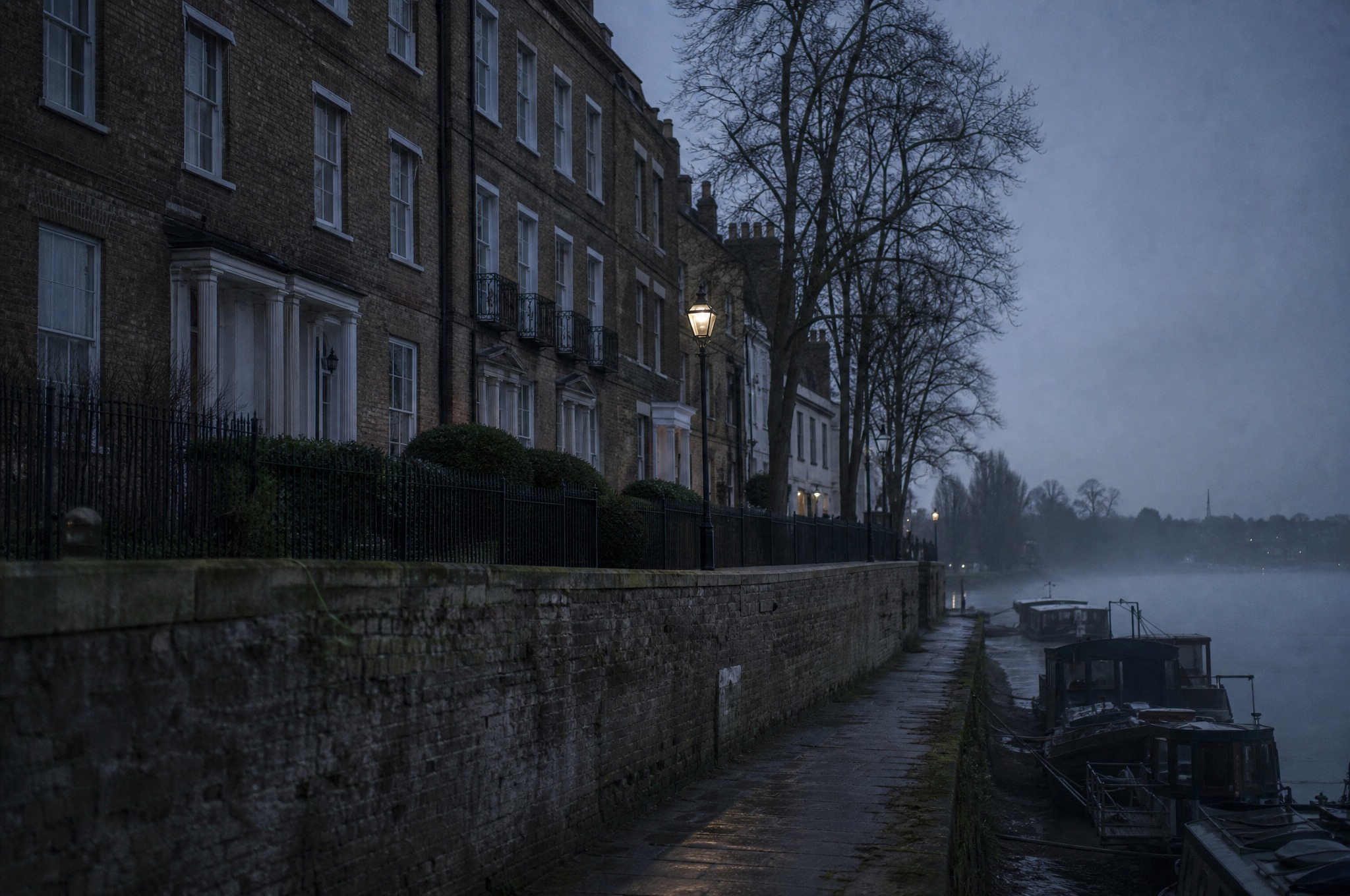
Where a route cannot be varied, the response is to vary everything else and to watch the fixed points properly. In Richmond that means working the timing rather than the geography, moving the departure within a workable window so the principal is not part of the same traffic each morning, and rotating the order of the crossings that are available even when the difference in journey time is marginal.
The pinch points are treated as the assessed exposure. A driver who covers a bridge approach daily is asked to know what normal looks like there, so that a vehicle waiting in the same position twice in a week registers rather than passes. On a constrained route this is the most useful detection available and it costs nothing to establish.
The household's several journeys are planned as one movement picture. The school run, the commute and the regular weekend pattern usually share the same first quarter mile, and treating them as unrelated schedules misses the point at which they overlap, which is where the exposure is.
Set down at the London end is planned separately from the journey, since it is a different problem in a different environment and is frequently the most exposed part of the day.
Drivers are protection trained. The role is protective and the vehicle is the means.
Richmond is handled to the same security chauffeuring standard as anywhere else, with river crossings and park closures as the local constraints.

Because the geography constrains the route, the assessment concentrates on the fixed points and on timing.
We identify the pinch points a household cannot avoid: the bridge approaches, the roads around the Green, and the junctions that carry every vehicle leaving the area at the relevant hour. Each is then assessed for observation, for how long a vehicle is likely to be stationary there, and for what normal looks like at that time of day.
Timing is the principal variable available. We establish the workable window for each regular journey and the practical effect of moving within it, so that the household is not part of the same traffic every morning. Where two or more crossings are available, we establish which are viable in each direction and at which hours, and set a rotation that does not cost meaningful time.
The household's several journeys are then mapped together. In Richmond the school run, the commute and the regular weekend pattern usually share the same first quarter mile, and treating them as separate schedules misses the point at which they overlap, which is where the exposure sits.
Drivers are briefed to know the fixed points well enough to notice what does not belong.

Richmond has a pronounced event calendar that changes the road network rather than the risk.
The Championships fortnight brings very large volumes to the south of the area, alters the crossings and fills the roads at hours that are normally quiet. Park events, river events and the summer weekends produce a milder version of the same effect. On those dates the usual timing plan is not simply slower, it is different.
Term time sets the regular pattern, and the start of the academic year is the point at which new arrangements are established that will hold for a year. That fortnight is the cheapest time to shape them.
Winter changes the picture in a quieter way. Darkness at both ends of the commute extends the period during which a following vehicle is harder to identify and a stationary one is less remarkable.
Where a principal's profile rises for professional reasons, the constrained geography becomes more significant, since there are only so many ways in and out and they are easily learned.
Journeys continuing south west leave the constrained roads behind and gain a different exposure, covered under security chauffeuring in Surrey.
The inbound run finishes in conditions described under security chauffeuring in Westminster.


Protect
Executive ProtectionDiscreet, intelligence led executive protection for private clients, principals and families, designed to reduce exposure and preserve freedom of movement without unnecessary visible presence.
Mitigate
Threat and Risk MitigationStructured assessment that identifies where exposure exists and reduces it through proportionate, intelligence led measures across people, places and routine.
Detect
Surveillance DetectionSurveillance detection identifies hostile interest and emerging patterns of activity, providing early warning of potential threats before targeting progresses to action.

Sweep
Technical SurveillanceTechnical surveillance that detects covert devices, unauthorised transmissions and technical compromise across residences, offices and sensitive environments.

Secure
Security ChauffeuringSecure movement delivered through trained protective drivers, intelligence led route planning and continuous situational awareness.
Fortify
Residential ProtectionResidential protection for private homes and estates, drawing on assessment, access control and continuity to protect principals and families at home.
Respond
Close Proximity ResponseA discreet, client carried alert and live location capability that lets a protective team maintain proximity and respond immediately, without an overt security presence.