
Discreet protective and residential support in Reigate. Coverage is shaped by a town at the meeting of two motorways, ten miles from Gatwick, with public downland rising directly above its northern gardens and a county headquarters on its southern edge.
Reigate lies at the foot of the North Downs where the M25 crosses the escarpment at junction 8 and the M23 turns south for Gatwick, ten miles away. The chalk ridge of Reigate Hill and Colley Hill rises directly behind the northern streets, National Trust land walked from the car park on the summit, and Gatton Park spreads over the slope to the east. Below the ridge sit the castle grounds, Priory Park and the High Street, with Reigate Heath and its windmill to the west. Surrey County Council has been based at Woodhatch Place on the southern edge since 2021, which adds public office to a population already made up of finance and insurance principals, aviation executives with Gatwick on their doorstep, and families arranged around Reigate Grammar School, Dunottar and the Royal Alexandra and Albert School at Gatton. Houses of scale sit around Wray Common, on the hill roads and in the lanes towards Betchworth. Trains from Reigate and from the main line at Redhill reach Victoria and London Bridge. Exposure is created by movement, and most of that movement is towards an airport.
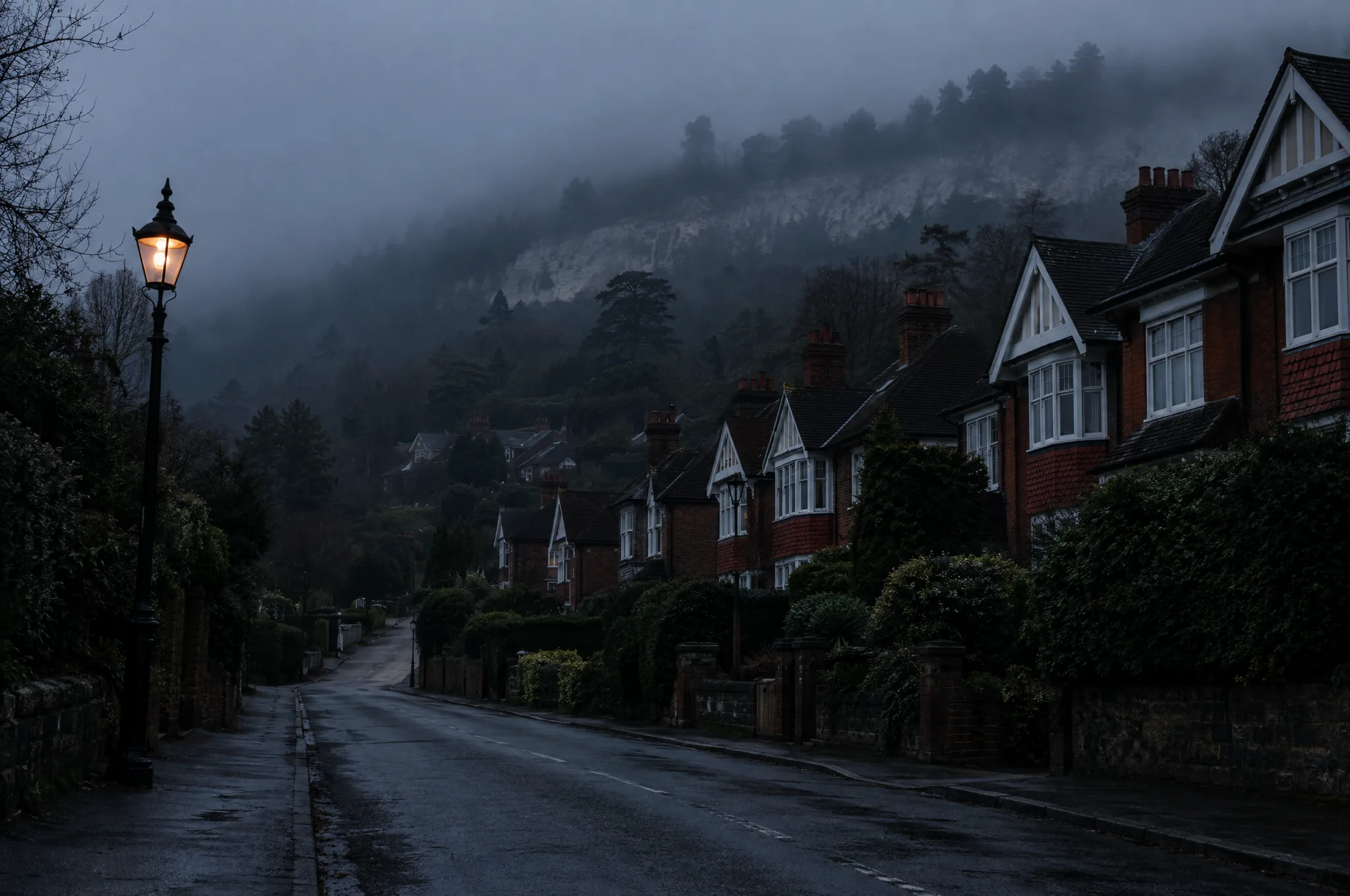
The practice plans Reigate around the journey. A principal here is frequently in the air several times a month, and the drive to Gatwick, the terminal itself and the return in the small hours carry more exposure than the house. We plan those movements deliberately: departure windows, the choice between the M23 and the A217, the drop at the terminal and the return. At the house we survey the ground above it, since the escarpment gives public footpaths a view down into gardens on the northern side, and the heath and commons give open approaches to the west. A senior figure at the council or at a company headquartered in the town has a diary that is partly published and an address that is entirely so. Officers work in ordinary clothes, drivers are chosen for observation, and nothing about the arrangement is designed to be seen.
Security Chauffeuring covers the Gatwick run, the London day and the school movements of households that use the M25 and M23 junction routinely.
Residential Protection is planned for houses below Reigate Hill, around Wray Common and on the lanes towards Betchworth, where North Downs paths reach the garden's edge.
Surveillance Detection confirms or dismisses the vehicle seen twice on the hill, at the school gate or on the airport road, before the household reacts.
Reigate's usefulness is its problem. Two motorways and an airport within fifteen minutes make it a natural base for people who travel constantly, and constant travel is observable.
The airport run is the core of the work. Gatwick is close enough that departures are booked late and treated casually, and the route is short enough to offer little variation: the A217 or the M25 to the M23, then the terminal. Planning concentrates on timing, on the forecourt and on the return, when the road is empty and any other car is conspicuous.
The junction brings its own traffic. Reigate Hill queues for the M25 most mornings, and a principal held stationary in a known car is more exposed than one moving.
Residentially the ridge dominates. Houses on the northern side sit below Colley Hill and the Reigate Hill car park, from which a walker looks straight down into the gardens, and the footpaths along the top are public at all hours. To the west the heath and the golf course leave long boundaries against open ground.
Wray Common is quieter, with large houses on generous plots and the risk sitting in contractor access rather than in the approach.
The council headquarters at Woodhatch adds a category of principal for whom attention is political rather than financial, and for whom a visible arrangement would be its own story.
Beyond the M25 the downland continues east towards Sevenoaks and Knole, and the same motorway carries traffic west to Cobham.
The county as a whole is covered under Surrey.
The airport sets the year. The summer departure season from Gatwick runs from late June to early September, when the forecourts are crowded, flights leave early and drop off zones are policed for dwell time, which leaves no room for a second pass. Half term and Christmas repeat the pattern on a smaller scale.
The motorway has its own calendar. Overnight closures of the M23 and M25 are announced in advance and push traffic through the town and over the hill, changing the routes a household considers normal.
Residentially the winter opens the ridge. The trees that screen the northern gardens in summer are bare from November to April, and the view from the top is at its clearest exactly when the paths are quietest.
School terms fix the morning to the same roads at the same time, and the school run is planned with the airport run since the two frequently share a driver.
Gatwick also serves principals across the western Kent belt, who use the same stretch of the M25.
Airport movement is the first request, and in Reigate it is requested as a standing arrangement rather than as an occasional one. Principals want a driver who knows the terminal, the timing and the return, and who can cover a London day when the flight is in the evening.
The second request is confirmation. A principal has noticed the same car twice on the hill or at the school gate, and asks whether the pattern is real. That question is answered by surveillance detection, and the answer is often no.
Residential surveys follow, with the escarpment behind the house and the footpaths above it the usual subject.
Executive protection is asked for around specific events: a hearing, a council decision, a company result.
Technical work is occasional and tends to concern companies with offices in the town rather than private houses.
Family members flying alone are frequently covered by planning and a client carried alert rather than by an accompanying officer.
The standing arrangement for airport and London journeys is set out under security chauffeuring.
All enquiries are handled discreetly and reviewed before engagement suitability is determined. Information should be limited to what is necessary to outline the matter. Where appropriate, further contact is arranged following review.

Protect
Executive ProtectionDiscreet, intelligence led executive protection for private clients, principals and families, designed to reduce exposure and preserve freedom of movement without unnecessary visible presence.
Mitigate
Threat and Risk MitigationStructured assessment that identifies where exposure exists and reduces it through proportionate, targeted measures across people, places and routine.
Detect
Surveillance DetectionSurveillance detection identifies hostile interest and emerging patterns of activity, providing early warning of potential threats before targeting progresses to action.
Sweep
Technical SurveillanceTechnical surveillance that detects covert devices, unauthorised transmissions and technical compromise across residences, offices and sensitive environments.

Secure
Security ChauffeuringSecure movement delivered through trained protective drivers, considered route planning and continuous situational awareness.
Fortify
Residential ProtectionResidential protection for private homes and estates, drawing on assessment, access control and continuity to protect principals and families at home.

Respond
Close Proximity Response™A discreet, client carried alert and live location capability that lets a protective team maintain proximity and respond immediately, without an overt security presence.