
Discreet protective and residential support in Harrogate. Coverage is shaped by substantial Victorian houses on the Duchy estate and around the Stray, an exhibition and show calendar that fills the town on known dates, and principals whose working day is in Leeds.
Harrogate is the northern point of the Yorkshire golden triangle, the band of wealth that runs between the town, York and the northern suburbs of Leeds. Its most valuable houses stand on the Duchy estate north west of the centre, where Kent Road, Duchy Road and Cornwall Road run in parallel between high hedges and long drives on land still owned by the Duchy of Lancaster. South of the town, Fulwith Mill Lane and the roads towards Pannal hold large detached properties on generous plots, and the Victorian villas edging the Stray, two hundred acres of protected open grassland wrapped around the centre, complete the picture. Residents are business owners, senior professionals with practices in Leeds, landowning families from the surrounding dales and principals who moved north for the schools and the space. The Convention Centre, the Great Yorkshire Showground and the hotels draw large visiting populations on fixed dates. Movement runs south along the A61 to Leeds, to Leeds Bradford Airport twenty minutes away and east to the A1. A household's routine here is easily learnt.
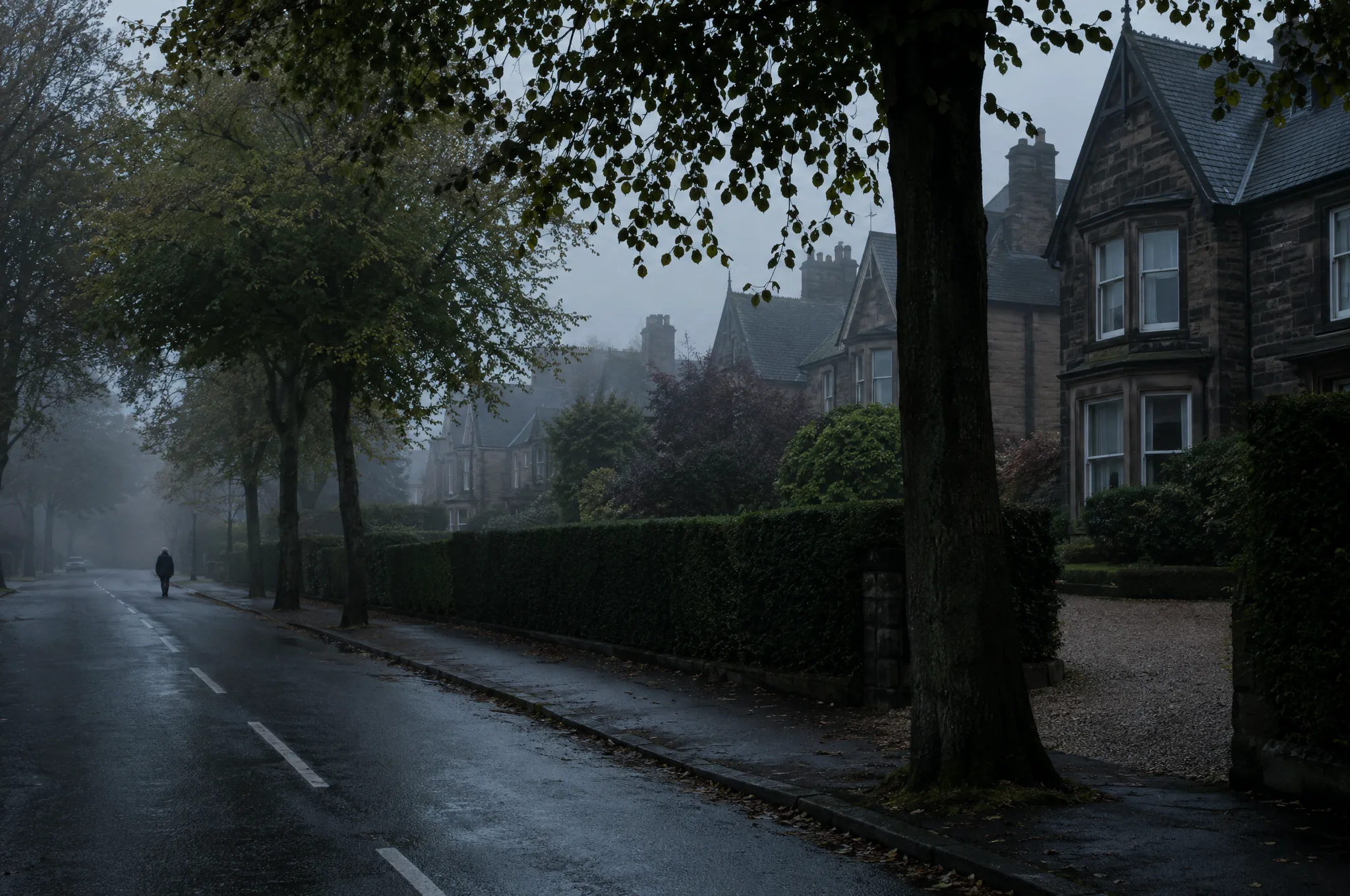
Harrogate is a residential and family requirement for most of the year and a crowd management problem for a few weeks of it. We assess the house first. The Duchy estate and the southern lanes present long boundaries, planting that screens both ways, gated drives and a circle of staff and tradesmen that widens access, and the Stray places open, public and unlit ground directly against residential frontages. We read the property from that ground first. For the commute we plan the run into Leeds and to the airport, both fixed at either end and variable in the middle. When the town fills for a show, a conference or a race meeting we treat the crowd as the environment and adjust arrival, routes and timing rather than adding people. A single officer, dressed for the town rather than for the role, is the usual footprint here.
Executive Protection covers principals and their families at the Great Yorkshire Show, the Convention Centre and appearances in Leeds with a footprint the town would take for a colleague.
Residential Protection reaches the large houses of the Duchy estate, the villas facing the Stray and the lanes towards Pannal, where open grass and parkland form the boundary.
Security Chauffeuring runs the A61 into Leeds each morning, the school run and Leeds Bradford Airport with a driver who notices when the same car turns off at Harewood twice.
The requirement in Harrogate is quiet and residential, and it is shaped by two pieces of open ground.
The Stray is the first. It is protected common land, cannot be built on and wraps the southern and eastern sides of the centre, which means the houses that face it look across an open, public and largely unlit space with no near neighbours opposite. The Valley Gardens and the Pinewoods do the same on the western side, against the Duchy estate. Both are walked and both are assessed after dark as well as in daylight.
The Duchy houses are large, mature and screened. High hedges and long drives give privacy and take away observation in equal measure, and a property that cannot be seen from the road is one whose gate can be watched without anyone noticing.
Households here employ a wide circle. Gardeners, housekeepers, drivers and the tradesmen a Victorian house needs continually are documented, and periods of absence, which in Harrogate are often long and seasonal, are managed rather than left.
The commute is the other half. Principals drive south to Leeds on the A61 or take the train, and the pattern is repeated often enough to be legible to anyone who cares to learn it.
The town is close knit. Unusual activity is noticed, which helps, and a household's affairs are known more widely than it would choose, which does not. A family that is recognisable through business or sport finds that its address, its schools and its absences are common knowledge, and the assessment starts from what is already known.
Harrogate's year is set by its shows. The Great Yorkshire Show fills the showground and the roads around it for three days each July, the flower shows bring their own traffic in spring and autumn, and the Convention Centre runs exhibitions through the year that put thousands of visitors in the hotels beside the Duchy estate. The crime writing festival in July and the Christmas market do the same on a smaller scale.
Racing at Ripon, Wetherby and York draws the county to fixed places on fixed dates, and a family with a public profile is more visible there than anywhere else in the year.
Residentially, winter matters most. Early darkness leaves the Stray and the Pinewoods unobserved against residential boundaries for long evenings, and many houses stand empty between Christmas and Easter.
The nearest comparable requirement across the Pennines is in Manchester, and households with interests in both are managed as one.
Residential assessments lead. A family on the Duchy estate or beside the Stray asks how a screened house on open ground reads to someone watching it, and the finding is usually about the gate, the drive and the circle of people who know the routine rather than about the fabric of the property.
Security chauffeuring follows closely, mainly the run into Leeds and to the airport, and the school run to the independent schools in and around the town.
Close protection is requested around show days, race meetings and appearances in Leeds, and is arranged so that the officer reads as a member of the party.
Landowning families ask for the estate outside the town and the house inside it to be treated together, since they share staff and vehicles.
Periods of absence are a recurring request. Houses here are left for weeks at a time in winter and after Christmas, and the arrangement covers who visits, when and what triggers a response.
A household that has become recognisable, through business, sport or press interest, asks what is already discoverable about it. That review, and the changes it prompts, falls under threat and risk mitigation.
Repeated presence on a quiet Duchy road is established or dismissed through surveillance detection.
All enquiries are handled discreetly and reviewed before engagement suitability is determined. Information should be limited to what is necessary to outline the matter. Where appropriate, further contact is arranged following review.

Protect
Executive ProtectionDiscreet, intelligence led executive protection for private clients, principals and families, designed to reduce exposure and preserve freedom of movement without unnecessary visible presence.
Mitigate
Threat and Risk MitigationStructured assessment that identifies where exposure exists and reduces it through proportionate, targeted measures across people, places and routine.
Detect
Surveillance DetectionSurveillance detection identifies hostile interest and emerging patterns of activity, providing early warning of potential threats before targeting progresses to action.
Sweep
Technical SurveillanceTechnical surveillance that detects covert devices, unauthorised transmissions and technical compromise across residences, offices and sensitive environments.

Secure
Security ChauffeuringSecure movement delivered through trained protective drivers, considered route planning and continuous situational awareness.
Fortify
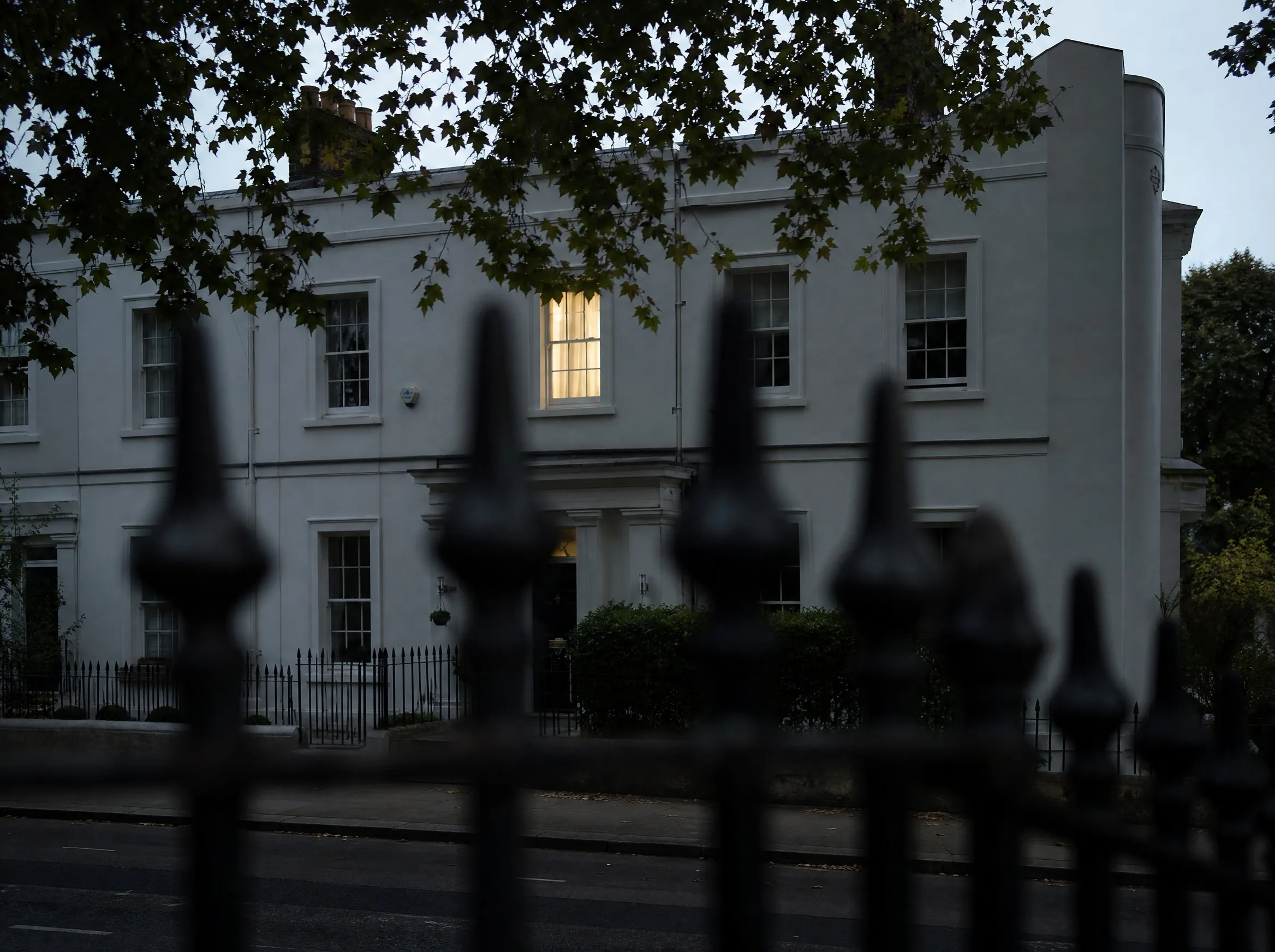
Residential ProtectionResidential protection for private homes and estates, drawing on assessment, access control and continuity to protect principals and families at home.

Respond
Close Proximity Response™A discreet, client carried alert and live location capability that lets a protective team maintain proximity and respond immediately, without an overt security presence.