
Technical surveillance in the City of London for boardrooms, private offices and meeting spaces where a single conversation carries commercial consequence.
The City of London is a working district of roughly one square mile in which a very large proportion of the conversations held on any given day have a value to somebody else. Institutions, law firms, exchanges and global headquarters sit alongside insurance and professional services, and the material discussed in their meeting rooms is frequently price sensitive, legally privileged or commercially decisive.
The technical exposure follows from the way the district is built and occupied. Buildings are shared. Floors are let and sublet, tenants change, and a single address may hold a dozen unrelated organisations behind the same lobby. Facilities management, cleaning, catering and maintenance are outsourced, which means a routine and largely unrecorded flow of people through spaces where sensitive discussion takes place.
Fit out and refurbishment are constant. A meeting room that was surveyed a year ago has since had cabling changed, furniture replaced and audio visual equipment installed by a contractor nobody in the organisation could now name. Modern boardrooms are dense with connected devices, and the distinction between equipment that is supposed to listen and equipment that is not is less obvious than it used to be.
Set piece moments raise the stakes. Results days, transactions, litigation and negotiations concentrate valuable conversation into known rooms on known dates.
Movement and residential requirements arise here too, and our coverage of the City of London deals with them alongside technical work.

Technical surveillance is an examination, not a product. Work in the City is scoped against what is actually discussed in a space and what it would be worth to somebody to hear it, because that determines both the likelihood of a technical attack and the sophistication that would be brought to it. A boardroom used for a live transaction is a different proposition to a general meeting room, and the survey reflects that.
An examination covers the radio frequency environment, the physical fabric of the room, its furniture and fittings, its power and data infrastructure, and the connected equipment installed in it. The physical and infrastructure elements matter as much as the radio work; a device that is not transmitting at the moment of the survey is invisible to a detector and obvious to an examination.
Timing is planned deliberately. A sweep is most useful immediately before a sensitive period and immediately after any work that gave third party access to the room. Surveying on a fixed annual cycle, unconnected to either, is the most common way for an organisation to hold a clean report and an exposed room at the same time.
Findings are reported clearly and to a defined recipient. In a shared building with outsourced services, who learns the result of an examination is itself a security decision.
An inspection follows the same technical surveillance method wherever it is carried out; the City contributes serviced floors, shared risers and a great many contractors with access.

The examination is scoped before it is conducted, and the scoping is a conversation about value rather than square footage.
We establish what is actually discussed in each space, who would benefit from hearing it, and what that party would realistically be willing to commit. A boardroom in which a live transaction is being negotiated attracts a different order of attention to a general meeting room, and the survey is specified accordingly.
We then establish the boundary of the organisation's control. In a multi tenant building with outsourced facilities, cleaning and maintenance, that boundary rarely coincides with the demise of the floor. Risers, ceiling voids, plant rooms and building management systems are frequently shared, and a survey that stops at the tenancy line has stopped early.
Access history is obtained where it exists. Which contractors have been in the room, when, under whose supervision, and what work was done narrows the examination considerably. Where no record exists, establishing one becomes part of the recommendation.
The examination itself covers the radio frequency environment, the physical fabric, furniture and fittings, power and data infrastructure and installed equipment. Findings go to one named recipient agreed in advance.
An inspection sometimes finds nothing inside and the concern is people outside, which is surveillance detection rather than technical work.
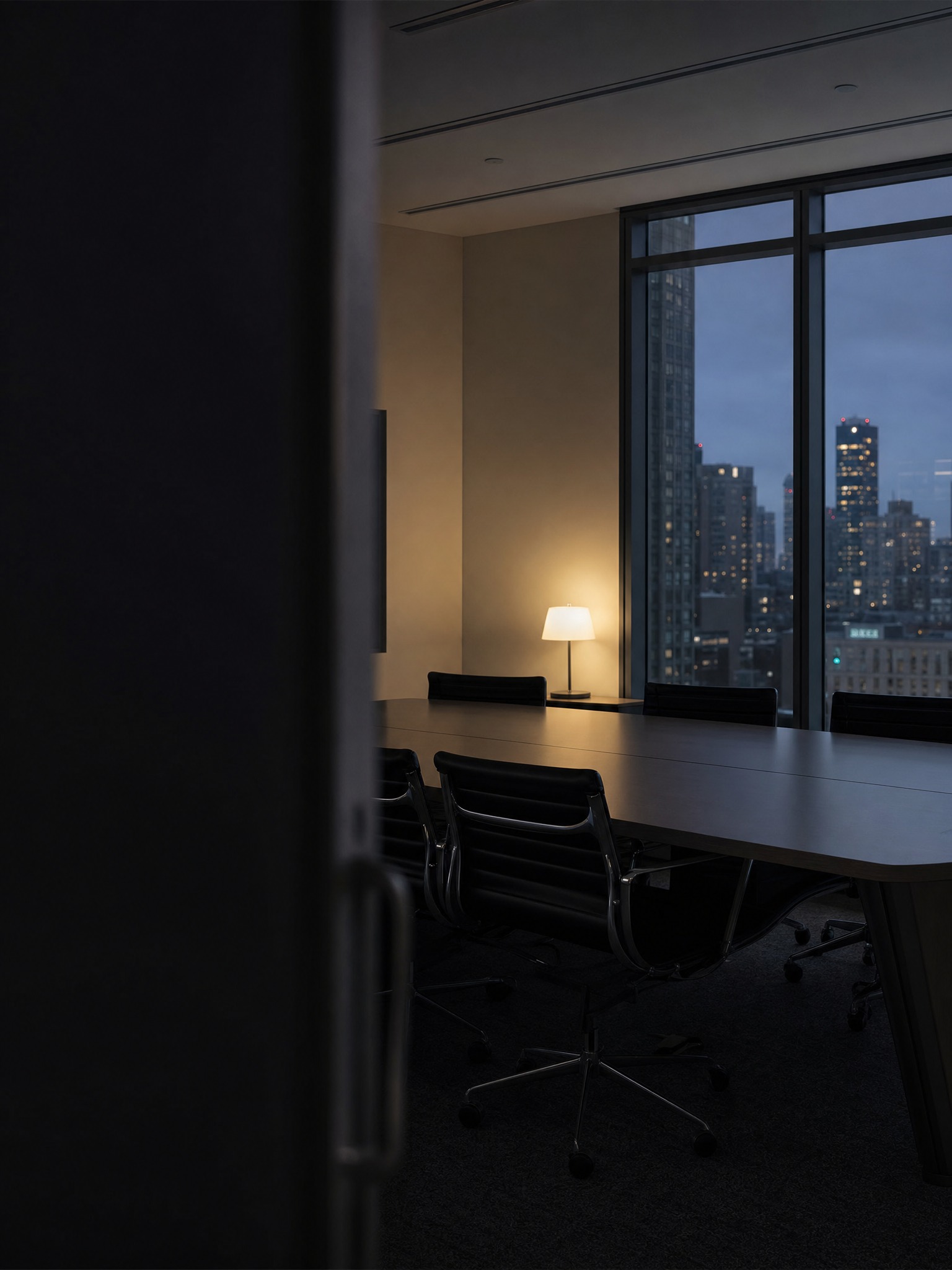
Technical exposure in the City is event driven rather than constant, and the events are largely foreseeable.
Reporting season concentrates price sensitive discussion into known rooms on known dates. Transactions, disputes, regulatory matters and restructurings do the same over longer periods, and each carries a party with a direct material interest in what is said. Board and committee cycles are fixed a year ahead.
The other trigger is access. Any period during which third parties have had unaccompanied time in a sensitive space raises the value of an examination sharply: a refurbishment, a cabling change, an audio visual installation, a furniture replacement, a change of cleaning contractor, or a floor taken over from a previous tenant.
Those two triggers, a sensitive period beginning and a period of third party access ending, are when an examination is worth most. An annual survey unconnected to either is the most common way for an organisation to hold a clean report and an exposed room at the same time.
We would rather be engaged against the calendar than against a subscription.
Estates east of the City are managed to a different standard again, and technical surveillance in Canary Wharf sets out what that changes.
Sensitive rooms in the West End sit inside much smaller buildings, and technical surveillance in Mayfair covers that pattern.


Protect
Executive ProtectionDiscreet, intelligence led executive protection for private clients, principals and families, designed to reduce exposure and preserve freedom of movement without unnecessary visible presence.
Mitigate
Threat and Risk MitigationStructured assessment that identifies where exposure exists and reduces it through proportionate, intelligence led measures across people, places and routine.

Detect
Surveillance DetectionSurveillance detection identifies hostile interest and emerging patterns of activity, providing early warning of potential threats before targeting progresses to action.

Sweep
Technical SurveillanceTechnical surveillance that detects covert devices, unauthorised transmissions and technical compromise across residences, offices and sensitive environments.

Secure
Security ChauffeuringSecure movement delivered through trained protective drivers, intelligence led route planning and continuous situational awareness.

Fortify
Residential ProtectionResidential protection for private homes and estates, drawing on assessment, access control and continuity to protect principals and families at home.
Respond
Close Proximity ResponseA discreet, client carried alert and live location capability that lets a protective team maintain proximity and respond immediately, without an overt security presence.