
Residential protection across the Cotswolds for country estates and second homes, planned around dispersed properties, long boundaries and distance from response.
The Cotswolds is a region of dispersed rural affluence across a wide band of countryside around Chipping Norton, Burford and Daylesford. Country estates and period houses sit in open farmland reached by long private drives, and a substantial proportion are second homes belonging to London based principals, media figures and public names who divide their time between the capital and the country.
The exposure is defined by distance. Properties are far apart and screened by land rather than by neighbours. Boundaries run for hundreds of metres with open sightlines across which arrival and departure are visible long before anyone reaches the house. The seclusion that draws people to the region is the same quality that isolates them: there is no passing footfall to notice anything, no neighbouring window overlooking the approach, and a response time measured in a different order of magnitude to central London.
Estates run on people. Household staff, estate workers, grooms, gardeners and local contractors come and go across a large site, often with a degree of autonomy that would be unusual in a town house, and often known to a wide local circle.
Occupancy is the other factor. A second home stands empty for long periods and its occupation is legible from outside, through vehicles, lights and the visible activity of staff. When the family is in residence, the county tends to know.
Weekend occupancy, estate staff and long empty periods each create a different exposure, and our coverage of the Cotswolds addresses them in turn.
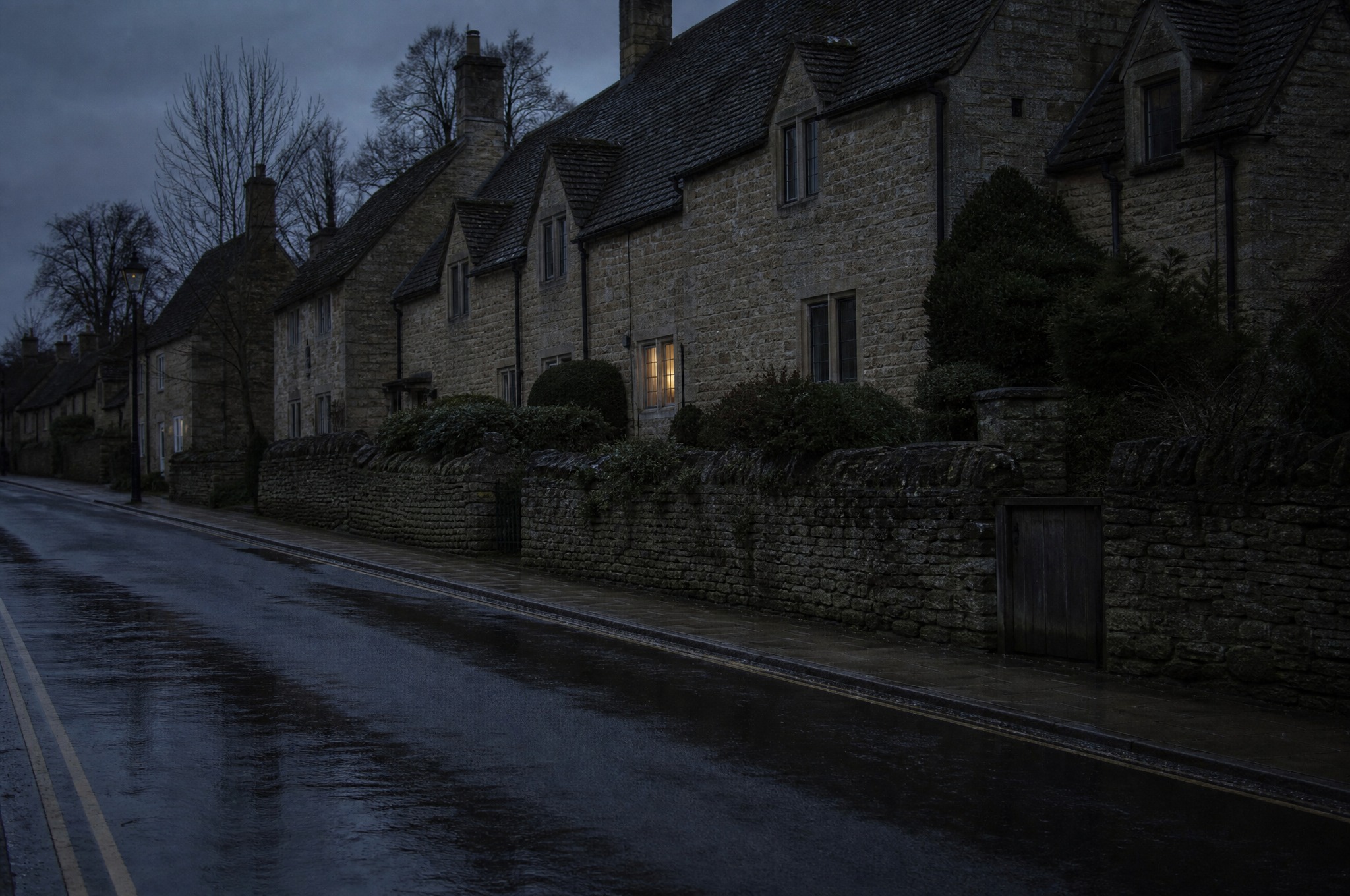
Rural residential protection is built around detection at distance rather than resistance at the door. On an estate, the useful question is how much warning the household has, and the survey concentrates on the approaches: the drive, the field boundaries, the tracks and rights of way that cross or adjoin the land, and the points at which a vehicle can be left without attracting attention.
Layers are set outward from the house. Detection at the boundary and along the drive gives time, lighting and camera positions are placed to identify rather than merely to record, and the house itself is ordered so that the household can reach a secure position and communicate while help is still some distance away. Distance from response is not a problem that can be solved, so it is planned for.
Staff and local knowledge are handled deliberately. On an estate, the people who work the land are also the people best placed to notice a vehicle that does not belong, and a household that has established what to report and to whom gains a considerable early warning capability at no cost. Equally, the size of the local circle that knows the family's movements is itself an exposure and is assessed as one.
Occupancy is managed as a variable. How the estate presents when empty, how a return is arranged, and how visibly the household's arrival is signalled are all within the family's control once they are looked at directly.
The residential protection method does not change in the country; the distances, the response times and the number of unobserved approaches do.
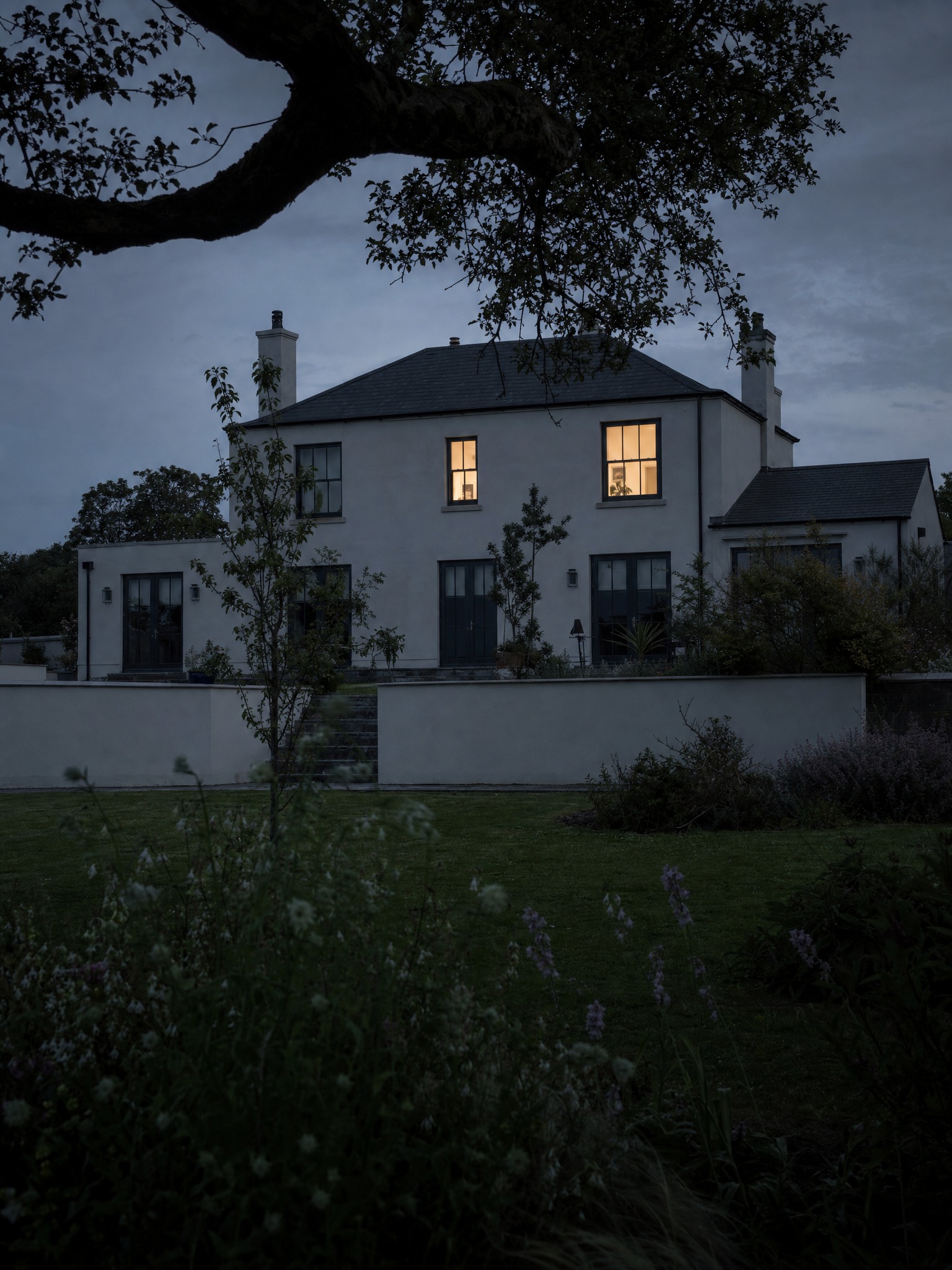
A rural assessment is a survey of approaches rather than of a building. We walk or drive the drive itself, the field boundaries, any track, bridleway or public right of way that crosses or adjoins the land, and the points on the surrounding lanes where a vehicle can be left for an hour without attracting comment. On most estates that last category is the finding that surprises the household.
From those approaches we establish how much warning the house would have. That figure, measured in minutes, governs everything that follows, because it determines whether detection at the boundary is useful or whether the work has to happen closer in.
The house is then assessed for how long it holds and whether the household can reach a secure position and communicate while help is still some distance away. Realistic response times are obtained rather than assumed.
The staff and contractor picture is documented as it would be in London, but with the addition that estate workers frequently have autonomous access across a large site and are known to a wide local circle. That circle is an asset for early warning and an exposure for information, and the assessment treats it as both.
The journey between the two houses is frequently the most exposed part of the week, and security chauffeuring is where that is dealt with.
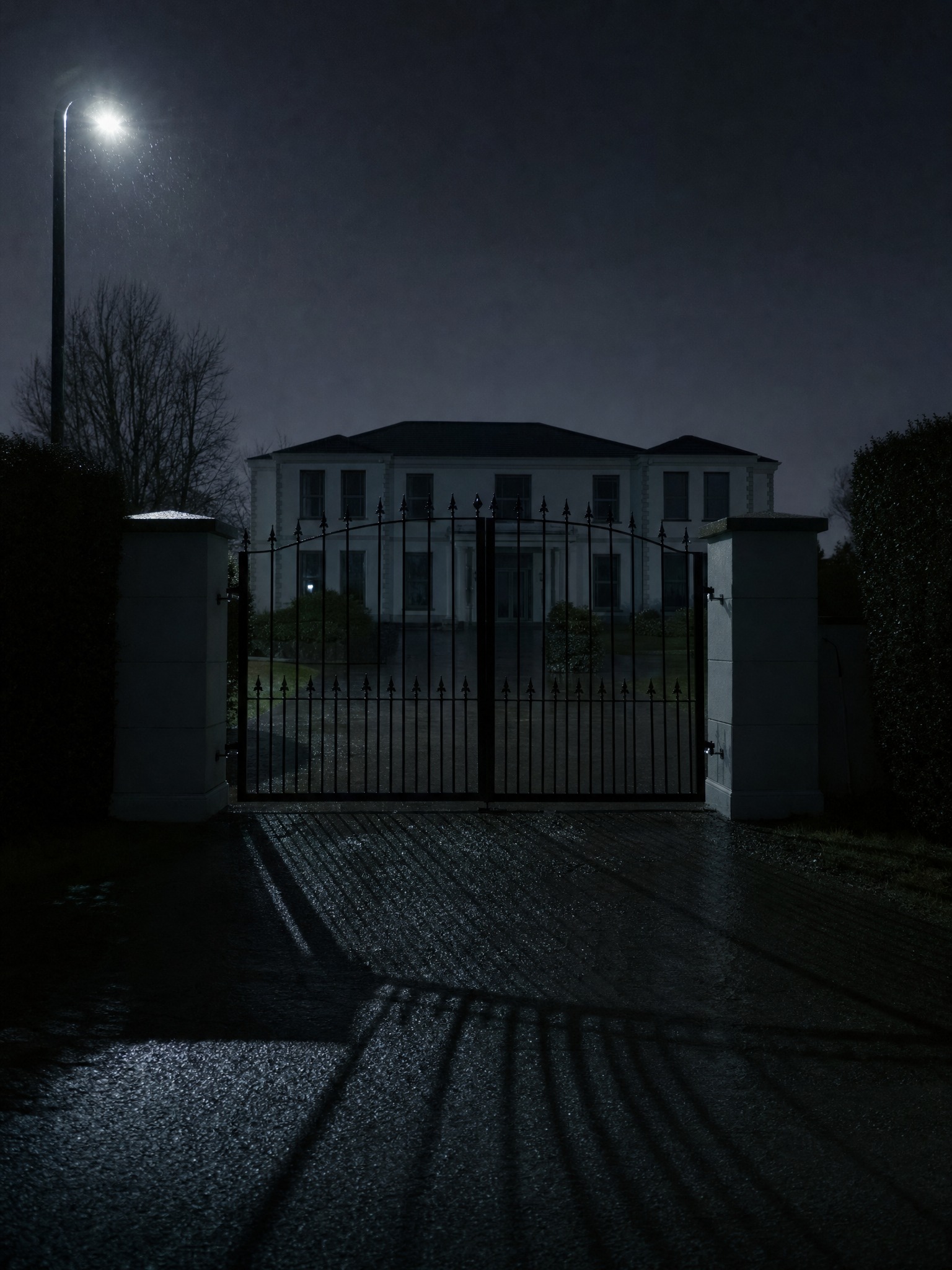
The country calendar is unusually legible from outside. Occupation rises sharply over the summer, at Christmas and across the shooting season, and falls away in between. Local knowledge of who is in residence is close to complete, because the same suppliers, staff and contractors serve every property in the area.
The summer weeks bring festivals, race meetings, private parties and a substantial visiting population to a rural road network with few routes and little passing observation. Arrival and departure at a country property during that period is both more frequent and more visible than at any other time of year.
The empty months carry the opposite problem. A property standing unoccupied through February on a long drive, screened from every neighbour, is the least observed it will be all year, and rural acquisitive crime is well organised and mobile.
Where a household divides its time between the country and London, we assess both properties as one picture. The country address is usually the less protected of the two and frequently the better known.
Most households here keep a London address as well, and residential protection in Hampstead covers the other half of that arrangement.

Protect
Executive ProtectionDiscreet, intelligence led executive protection for private clients, principals and families, designed to reduce exposure and preserve freedom of movement without unnecessary visible presence.
Mitigate
Threat and Risk MitigationStructured assessment that identifies where exposure exists and reduces it through proportionate, intelligence led measures across people, places and routine.
Detect
Surveillance DetectionSurveillance detection identifies hostile interest and emerging patterns of activity, providing early warning of potential threats before targeting progresses to action.
Sweep
Technical SurveillanceTechnical surveillance that detects covert devices, unauthorised transmissions and technical compromise across residences, offices and sensitive environments.

Secure
Security ChauffeuringSecure movement delivered through trained protective drivers, intelligence led route planning and continuous situational awareness.
Fortify
Residential ProtectionResidential protection for private homes and estates, drawing on assessment, access control and continuity to protect principals and families at home.
Respond
Close Proximity ResponseA discreet, client carried alert and live location capability that lets a protective team maintain proximity and respond immediately, without an overt security presence.